
Rooted in Washington. Built on Family. Led with Heart.
Durable Surfaces for High-Traffic Outdoor Areas
Pavers in Bellevue for driveways, walkways, and patios requiring stable, low-maintenance surfaces that resist settling and weathering
Paver installations begin with excavating to a depth that accommodates the compacted base, bedding sand, and paver thickness, ensuring that the finished surface aligns with adjacent grades and drainage flows direct water away from structures and planted areas. Manzano Landscaping uses a layered base preparation process—compacting aggregate in lifts to create a stable foundation that resists settling even under vehicle weight or freeze-thaw cycles common in King County's winter months. Edge restraints lock pavers in place and prevent lateral creep that causes joint separation and surface irregularities over time, while bedding sand provides a level setting bed that allows minor adjustments during installation to achieve precise alignment and consistent joint spacing.
Paver surfaces handle both foot traffic and vehicle loads without cracking or developing the surface degradation that occurs with poured concrete as moisture infiltrates and expands during cold snaps. The individual unit construction allows for easy access to underground utilities if repairs are needed, since pavers lift out and reset without demolition, and patterns or color accents can integrate into the layout to define borders, create visual interest, or delineate functional zones within larger paved areas.
Request a paver installation estimate to review layout options, material selections, and how the installation integrates with your property's existing landscape and hardscape features.
What Changes After Paver Installation Completes
Properly installed paver surfaces eliminate the maintenance issues associated with cracked concrete or degraded asphalt, including trip hazards from uneven settling, weed growth through expansion joints, and surface staining that penetrates porous materials. The interlocking design distributes loads across multiple units rather than concentrating stress in single slabs, reducing the risk of cracking under weight or ground movement.
You'll notice that paver driveways, walkways, and patios remain level and stable without the sunken spots or raised edges that develop when subgrade settles unevenly, water drains efficiently through joints rather than pooling on impervious surfaces, and the appearance stays consistent because individual pavers don't fade or crack the way monolithic concrete does as it ages. Maintenance involves occasional joint sand replenishment and surface cleaning rather than resurfacing or patching, and if underground utility work requires excavation, affected pavers remove and reinstall without leaving permanent repair scars.
Paver installations integrate into broader landscape plans by coordinating with planting bed edges, drainage paths, and irrigation line routing, ensuring that the paved surface functions as part of a cohesive outdoor system. Material choices range from traditional rectangular units to irregular stone patterns, with color options that complement your home's exterior and surrounding hardscape elements.
Questions Before Starting Your Project
Clients in Bellevue and surrounding areas often ask about base requirements, long-term performance, and how paver installations compare to alternative paving methods.
What makes base preparation essential for paver longevity?
The compacted aggregate base prevents settling by distributing weight across a stable layer that doesn't shift as soil beneath compacts or saturates during wet months, while proper compaction ensures that surface loads transfer evenly rather than concentrating pressure in weak spots that cause pavers to sink or tilt.
How do pavers perform compared to poured concrete in Pacific Northwest conditions?
Pavers handle freeze-thaw cycles better than concrete because individual units flex independently without cracking, joints allow water infiltration and drainage rather than trapping moisture on the surface, and any settling that does occur affects isolated pavers rather than creating long cracks across the entire surface.
When do paver surfaces need joint sand replenishment?
Joint sand stabilizes pavers and prevents lateral movement but gradually washes out during heavy rain or erodes from pressure washing, typically requiring topping off every few years depending on traffic levels and how often the surface is cleaned, with polymeric sand options offering better resistance to washout.
What paver patterns work best for driveways versus walkways?
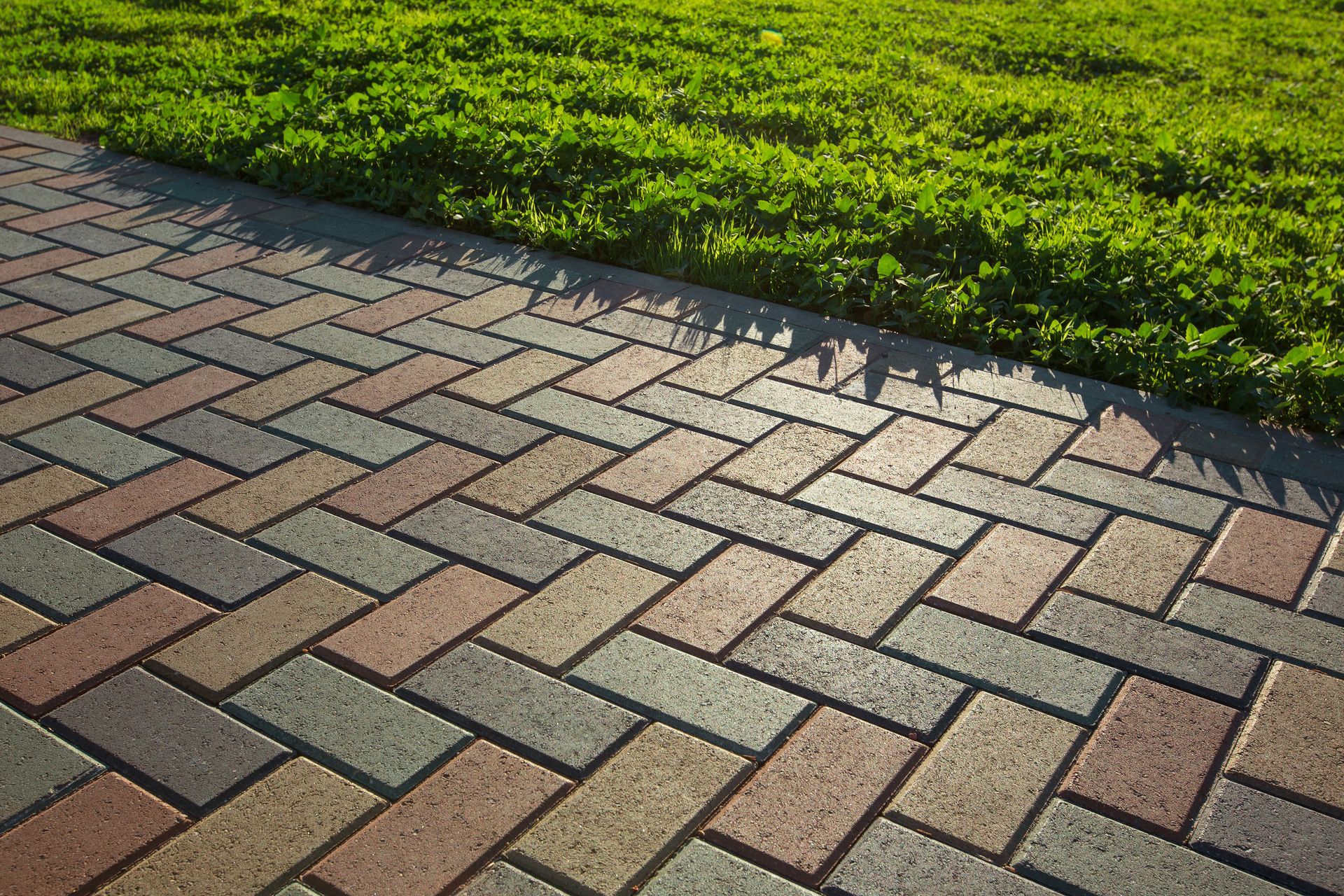
Herringbone or interlocking patterns provide maximum resistance to lateral creep under vehicle turning forces, making them ideal for driveways, while running bond or stack bond patterns suit lower-traffic walkways where visual simplicity or material economy is prioritized over maximum structural interlock.
How does paver installation integrate with existing landscape features?
Paver edges align with planting bed borders, tree root zones are avoided or accommodated with flexible edge details, and grading ensures that paved surfaces drain toward landscape areas or designated drainage systems rather than pooling against foundations or hardscape transitions where water infiltration or erosion can develop over time.
Manzano Landscaping handles paver projects from site preparation through final installation and joint stabilization, delivering surfaces built to withstand both functional demands and regional weather patterns. Call (206) 222-2984 to discuss your project scope and schedule a site evaluation for precise layout planning and material recommendations.