
Rooted in Washington. Built on Family. Led with Heart.
Structural Features That Define Outdoor Function
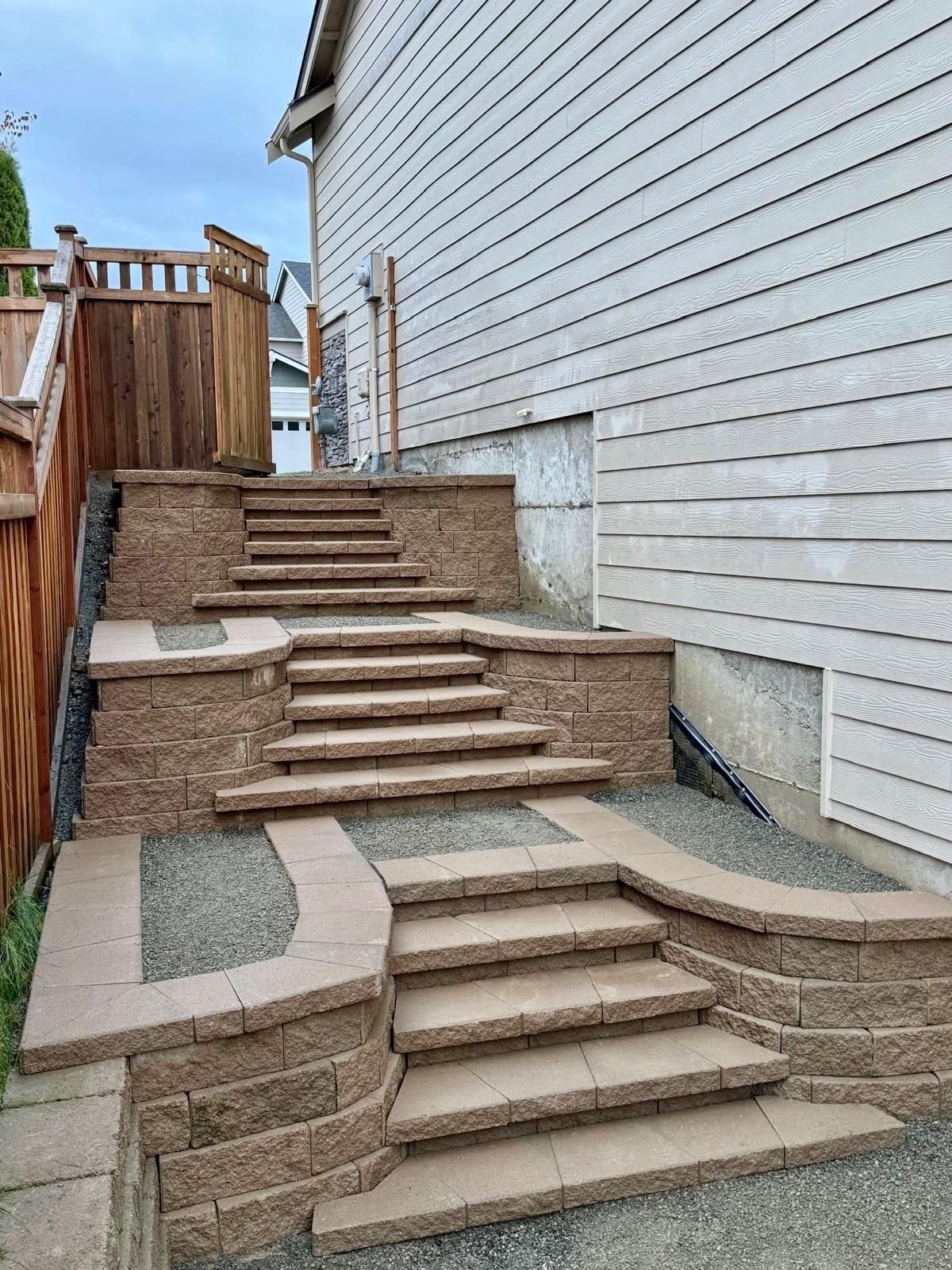
Hardscaping in Kent for properties needing patios, walkways, and outdoor living elements that handle weather exposure and daily use
Proper hardscaping installation in Kent begins with grading adjustments that direct water away from the structure and prevent pooling on finished surfaces, a critical step given the region's prolonged wet seasons and clay-heavy soils that drain slowly. Manzano Landscaping integrates hardscape features with surrounding landscape design so that patios, walkways, and retaining elements function as part of a complete outdoor system rather than isolated additions that disrupt drainage patterns or create maintenance complications. Base preparation involves excavating to stable subgrade, adding compacted aggregate in layers to prevent settling, and ensuring that finished surfaces slope at least two percent away from foundations and toward designated drainage routes.
Hardscape elements expand usable outdoor space by creating level, stable surfaces for furniture, grilling areas, and foot traffic, even during wet months when lawn areas become soft and uneven. These installations also define zones within larger landscapes, separating high-traffic paths from planting beds and reducing soil compaction around tree roots and ornamental plantings.
Plan a custom hardscape project by scheduling a consultation to review site conditions and discuss material options suited to your property's grade and aesthetic.
What Hardscaping Actually Accomplishes
Hardscaping creates permanent outdoor infrastructure that resists weather-related degradation when built with appropriate base construction and material selection. High-quality stone, pavers, or composite materials withstand freeze-thaw cycles, UV exposure, and constant moisture without cracking, fading, or developing surface irregularities that trap water or create trip hazards.
Once installation is complete, you'll notice that outdoor entertaining and daily movement no longer depend on ground conditions—patios remain level and dry, walkways provide clean passage regardless of recent rainfall, and the transition between indoor and outdoor spaces becomes functional year-round. Water that previously pooled near the foundation or in low yard areas now follows graded paths toward drainage systems, and landscape maintenance becomes easier because mowing and edging lines are clearly defined by hardscape borders.
Hardscape projects integrate with existing or planned irrigation and lighting systems, so trenches for utilities are coordinated during base preparation rather than cut through finished surfaces later. Material selection considers slip resistance, heat absorption, and color stability to ensure that surfaces remain safe and visually consistent as they age.
Answers to Frequent Service Questions
Clients typically ask about installation timelines, material durability, and how hardscaping interacts with existing site features.
What makes base preparation critical for hardscape longevity?
Without proper excavation and compacted aggregate layers, hardscape surfaces settle unevenly as soil beneath shifts during wet seasons, causing pavers to tilt, joints to separate, and drainage slopes to reverse, leading to water accumulation on surfaces that were originally graded correctly.
How do hardscape materials perform in Pacific Northwest weather?
Natural stone and quality pavers resist moisture absorption and freeze-thaw damage better than poured concrete, which can crack as water infiltrates and expands, while composite materials maintain color stability and slip resistance even with constant rain exposure and limited UV during overcast months.
When should hardscaping be installed relative to other landscape work?
Hardscaping typically happens after rough grading and drainage systems are in place but before final plantings, allowing heavy equipment access without damaging established plants and ensuring that irrigation lines route around rather than under hardscape structures where leaks are difficult to locate and repair.
What determines whether a patio or walkway needs additional drainage features?
Site slope, soil permeability, and proximity to the foundation determine whether surface grading alone will manage water or whether subsurface drains, gravel channels, or catch basins are needed to prevent saturation and erosion during heavy or prolonged rainfall common in King County.
How does hardscaping integrate with landscape design?
Hardscape placement considers sun exposure for seating areas, wind patterns that affect comfort, sight lines from interior rooms, and access routes that minimize foot traffic across planted zones, ensuring that structural elements support rather than conflict with how you actually use outdoor space.
Manzano Landscaping manages hardscape projects from site evaluation through final surface installation, coordinating grading, drainage, and material placement to deliver outdoor features built for long-term performance. Reach out to discuss your property's layout and explore hardscape options that enhance both function and visual appeal.