
Rooted in Washington. Built on Family. Led with Heart.
Landscapes That Stay Clean Without Constant Intervention
Landscape Maintenance in Kent for properties requiring consistent care that prevents overgrowth, moss invasion, and irrigation failures
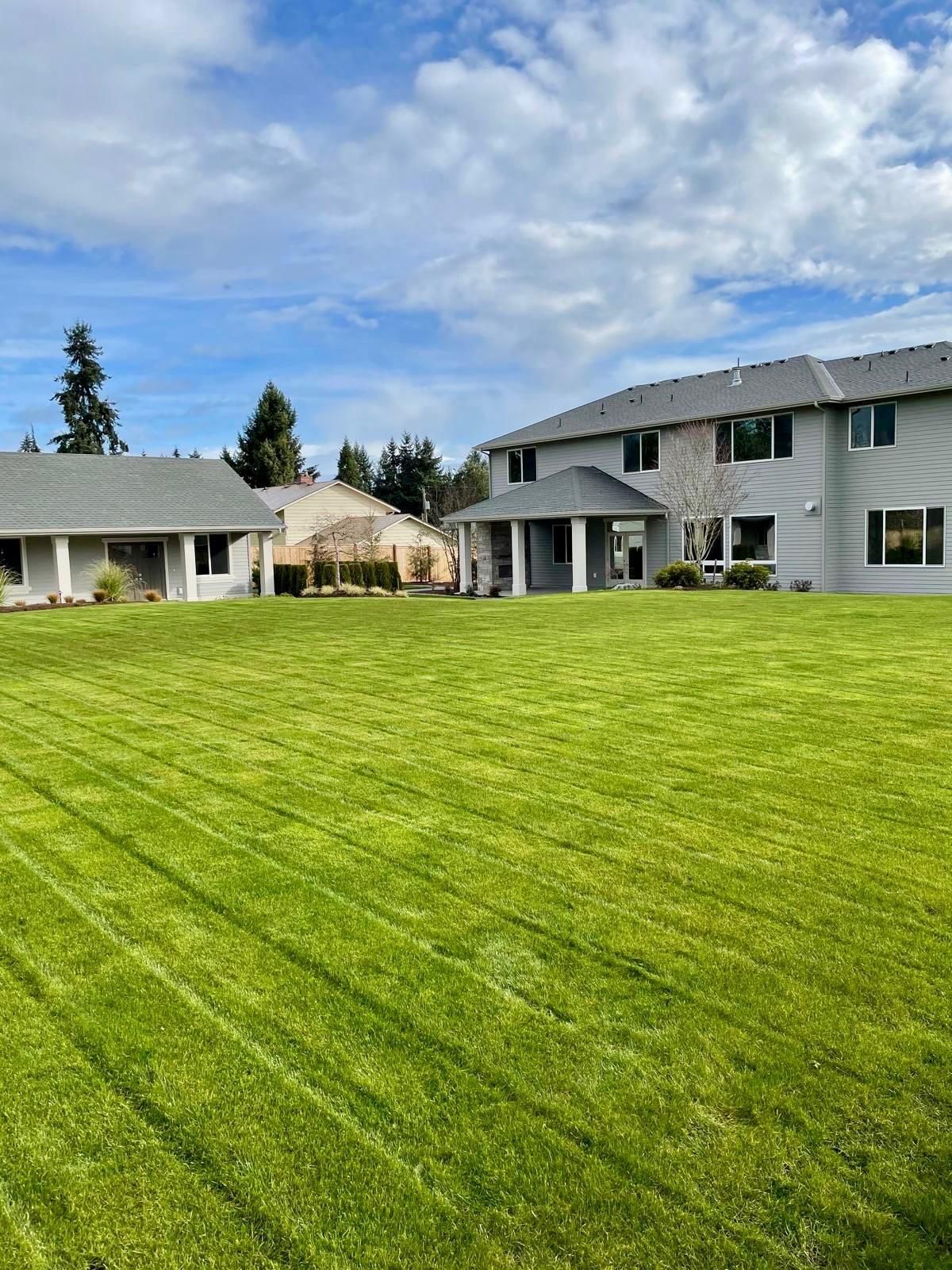
Moss establishes quickly in shaded Pacific Northwest lawns when soil compaction reduces air circulation and spring rains saturate the turf layer, creating the low-oxygen, high-moisture conditions moss thrives in while grass roots struggle. Manzano Landscaping addresses this through seasonal treatments timed with Kent's weather patterns—applying proprietary fertilizer and moss control formulations when soil temperatures and moisture levels allow maximum absorption and root response. The premium maintenance package includes lawn mowing, edging, aeration to break up compacted soil, debris cleanup, plant care with pruning for growth under ten feet, weed control in beds and hardscape joints, and irrigation system inspections to catch leaks or misaligned heads before water waste becomes visible.
Recurring maintenance prevents the common cycle where lawns look acceptable in summer but decline through fall and winter due to moss encroachment, compacted soil that sheds water rather than absorbing it, and unmanaged plant growth that blocks light and crowds out smaller species. Aeration creates channels for oxygen and nutrients to reach root zones, while seasonal treatments feed turf during active growth periods and suppress moss before it colonizes bare patches.
Request a free estimate to establish a maintenance plan based on your property's current condition and seasonal care requirements.
What Proper Landscape Maintenance Requires
Effective maintenance goes beyond mowing and blowing—it involves monitoring soil health, adjusting irrigation output as seasonal rainfall changes, and timing fertilizer applications so nutrients are available when grass actively grows rather than washing away during dormant periods. Weed control focuses on both surface removal and preventing seed germination in planting beds, while pruning maintains plant structure and airflow without cutting into next season's bloom wood or triggering excessive regrowth that requires more frequent trimming.
After seasonal treatments and aeration, your lawn develops denser turf coverage with deeper green color, moss retreats from previously colonized areas, and bare patches fill in as grass roots expand into newly aerated soil. Irrigation inspections ensure that spray patterns cover intended zones without overspray onto hardscape or building surfaces, and debris removal keeps leaf accumulation from smothering ground cover or clogging drainage paths along walkways and patios.
The premium package consolidates these tasks into a scheduled service cycle, so attention shifts from reactive problem-solving to maintaining established health. Plant care and weed control remain manageable because problems are addressed before they compound, and irrigation adjustments happen before dry spots or waterlogged zones become visible.
Common Questions About This Service
Property owners often want to understand service frequency, what each visit includes, and how seasonal treatments differ from standard lawn care.
What does the premium landscape package include that basic mowing doesn't?
In addition to cutting and edging, the premium package adds aeration to relieve soil compaction, seasonal fertilizer and moss control applications timed with regional growth cycles, irrigation system care including spring start-ups and inspections, debris cleanup beyond grass clippings, and plant pruning with weed control in beds and hardscape areas.
How often should aeration happen for lawns in King County?
Most lawns benefit from aeration once or twice per year depending on soil type and traffic levels, typically in early spring before active growth begins and again in fall if compaction is severe or clay content is high, allowing roots to access oxygen and water more efficiently.
When are seasonal treatments applied and why does timing matter?
Fertilizer applications align with turf growth phases—early spring feeding supports root development, summer applications sustain color during dry periods, and fall treatments strengthen roots before winter dormancy, while moss control works best when moss is actively growing but turf is not yet competing for the same space.
Why does irrigation need seasonal adjustment in the Pacific Northwest?
Rainfall varies dramatically between wet and dry months, so irrigation schedules set for July will overwater in October and November, promoting moss growth and root rot, while spring settings often under-deliver during summer dry spells unless output and frequency are recalibrated.
What's included in plant care and weed control?
Pruning removes dead or crossing branches, shapes growth to maintain intended size, and opens interior canopy for airflow, while weed control targets both emerged weeds and pre-emergent prevention in planting beds, along walkways, and between paver joints where seeds commonly germinate.
Manzano Landscaping tailors maintenance frequency and service scope to your property's specific needs, adjusting seasonal treatments based on observed turf response and changing weather conditions. Contact the team to arrange a property assessment and discuss recurring maintenance options.